
Get your message noticed with outdoor digital signage from MRG Systems. Display promotions, announcements and live updates on screens designed for outdoor use. We can help you choose a suitable screen setup based on your location, viewing conditions, and business needs.
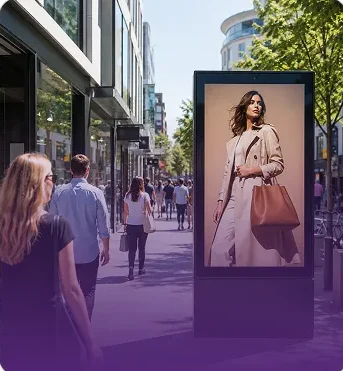
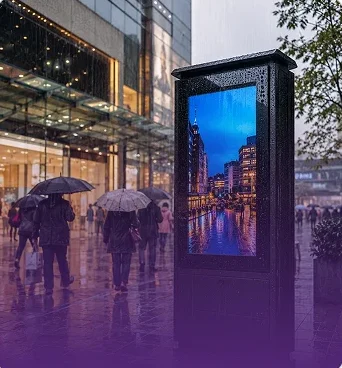
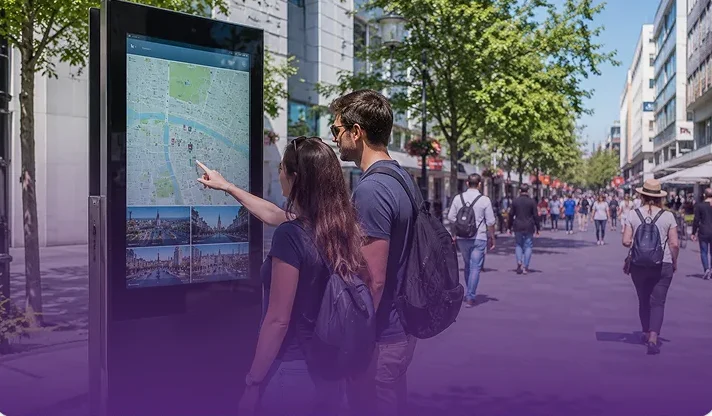
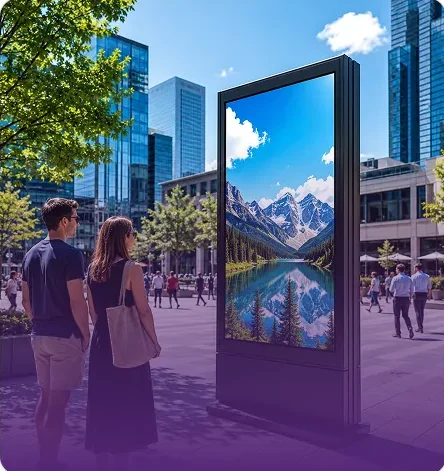
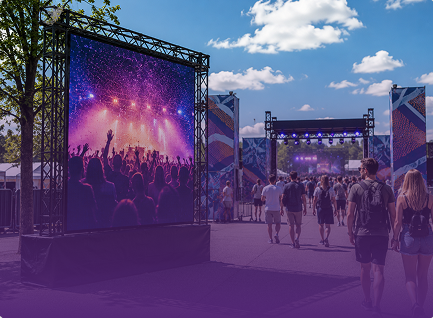
Outdoor screens need to handle changing weather and remain easy to read in different lighting conditions. MRG Systems can help you choose the right display for your space. Whether you want to display shop offers, promote events or share public information, the right outdoor digital signage setup helps people see your message when they pass by.
MRG Systems provides outdoor digital signage solutions designed to deliver clear, high-impact content in demanding environments.
MRG Systems gave us a reliable way to deliver high-impact content outdoors. The screens are easy to manage, and we can keep our messaging current without having to update displays manually.
Reach people as they pass your shop, venue or outdoor space. We can help you plan outdoor digital signage that suits your location and the messages you want to display.
Putting a screen outside is a different job from putting one in a reception. It has to be bright enough to read in full sun. It has to be sealed against rain and dust. And it has to survive a British winter. Get one of these wrong and you've bought an expensive black rectangle for your wall. MRG Systems has worked in visual communication for 43 years and supports more than 25,000 connected screens. Here we explain what makes an outdoor screen different, where it works best and what to ask before you buy.
An indoor screen put in a weatherproof box is still not an outdoor screen. It will glare, fog up, or die the first time the weather turns. Digital signage for outdoor use is different from the indoor kind in a few big ways. Start with brightness. Indoor screens are made for a lit room. Outdoor ones are several times brighter, so the picture stays clear when the sun hits it straight on. A south-facing wall needs a different spec from a shaded porch. Picking the wrong one is the most common mistake we see.
Then protection. Outdoor screens are sealed. An IP65 rating means dust can't get in and the case holds up against water jets from any direction. Heating and cooling inside the case keep the panel at a safe temperature, in frost and in a heatwave. Last is toughness. Screens in public places need toughened glass, an anti-glare surface and fixings that are hard to tamper with. People lean on them, bump into them and sometimes try to open them.
Anywhere people walk past but don't stop is a good place for a screen. These are the uses we see most:
Each use needs its own mix of brightness, size and mounting. A screen for outdoor advertising, for example, usually needs to be bigger than a shop-front display.
Outdoor digital signage for business works because it talks to people before they walk past. A cafe can show the lunch deal at 11am and the evening menu at 5pm. A garage can show fuel offers and opening hours. A retail park can push a sale to cars as they pull in. A paper board can't change itself. A screen can. You don't need a big estate to start. One screen is fine. Plenty of businesses begin at the entrance and add more once they see what customers respond to.
Two technologies cover most outdoor jobs. Outdoor-rated LCD screens sit in sealed, high-brightness cases. They suit sizes up to about a large domestic TV, so think totems, bus shelters, shop windows and building entrances. The picture is sharp up close and the cost is lower.
Large-format LED is built from modular panels. It suits screens that need to be very big or seen from far away, like a building facade, a roadside or a stadium concourse. You can make LED in almost any shape and size.
Which one is right depends on how far away people are, how big the space is, what content you'll run and your budget. For digital signage for outdoor use, we pick the screen for the light on your actual site. That's why we visit before we quote.
Outdoor screens come with a few things indoor screens don't. You may need planning permission, especially for advertising, for listed buildings or conservation areas, and for big screens people can see from a road. Power and data have to reach the screen too, sometimes across a car park or up a facade, so that route needs planning and protection. And fixings must be designed for wind, not only weight. We help you think through each of these early so the project doesn't stall halfway. If a screen faces a road, it also needs sensible brightness at night and some care about drivers' sightlines.
The hardware is half the job. A screen is only useful if the content stays fresh. LiveSpace is our own platform, and it runs outdoor screens from the same dashboard as your indoor ones. You can schedule content, send it to one site or all of them, and pull in live feeds like weather or transport times.
LiveSpace also keeps an eye on each screen, so we usually know about a problem before you do. And nobody has to climb a ladder to change a message.
We start with a site visit. We check which way the screen faces, how much direct sun it gets, how power and data will get to it and what the wall or ground can carry. Then we agree the screen, the mounting, and the content plan with you. Our UK engineers do the mounting, power and connection on every outdoor job. After install, our team in Gloucestershire handles support and monitoring. They are the same people who build LiveSpace, so you're not left chasing a reseller.
A well-chosen outdoor screen should give you many years of service. Running costs are electricity, which is higher than indoors because of the brightness and the heating and cooling, plus the platform subscription and support. Remote monitoring keeps site visits down. For advertisers, the sums look different. A screen that sells time to several advertisers can pay back faster than a static board sold to one. For councils and campuses, the saving comes from fewer printed notices and quicker updates. We can lay out the full cost for your site before you commit to anything.
Whoever you buy outdoor digital signage from should be able to answer these:
The best way to plan digital signage for outdoor spaces is to see the spot in daylight. We will visit, check the sun, the power and the mounting options, and give you a clear quote. Book a free consultation, ask for a quote, or call +44 (0)1453 820 840 and talk to our UK team directly.